How to Raise Your Credit Score with Hard Money

If you’re struggling with knowing how to raise your credit score, it might be time to check out a hard money usage loan.

Real estate investing is all about creative wealth using available leverage (other people’s money in the form of bank loans, hard money, etc.) to make a profit. It’s an accessible and lucrative field for first-time investors. 

However, a bad credit score can change the game.

Especially if you’re looking for larger, traditional loans, a bad credit score can immediately disqualify you from consideration.

But there is good news! Hard money (sometimes called “private money”) can save the day. 

The Cost of a Bad Score

A bad credit score (anything below 670 is often considered “poor”) can lower the quality of deals you find. If they do approve you for a loan, a bank will likely ask for an additional 10-20% down. 

You might be stuck with higher rates on a DSCR loan.

At worst, you won’t be approved for a loan at all.

This is both frustrating and very expensive.

How do Credit Scores Work?

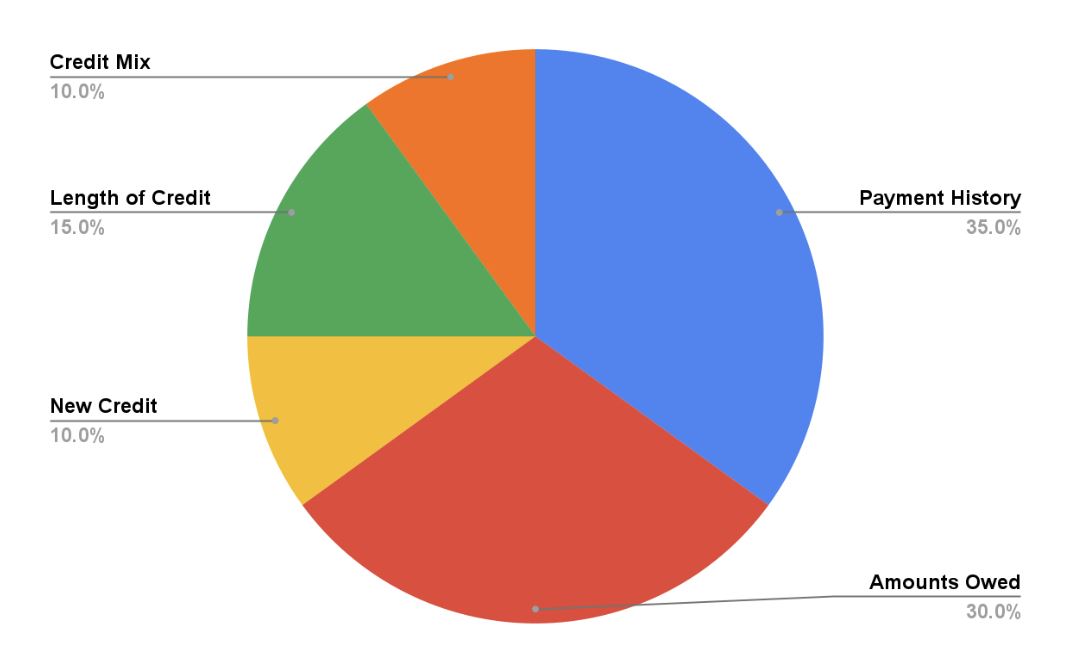
Your FICO score is essentially based off of 5 categories:

You’ll notice that the vast majority (over 2/3rds) of the score comes down to just 2 components:

  1. Payment History
  2. Amounts Owed (Usage)

If your score is low because of payment history, then there isn’t much we can do to fix that with a hard money loan. That’s a problem that takes time to resolve.

However, if your score is low because of the usage, hard money can provide a very quick fix that can raise your score in as little as 14 days.

What is Credit Usage?

Credit usage (that Amounts Owed section) measures the ratio of total money you could use with how much you do use

Essentially, if you have a total available balance of $1,000 and you’re constantly maxing out that credit card, then you have 100% usage.

Credit card companies typically like to see usage around 30%. If you’re new to the investment game and you don’t have constant cash flow from current properties, it can be really tricky to have optimal credit usage.

How to Raise Your Credit Score Using Hard Money

You can use a hard money usage loan to pay off your credit card. 

This lowers your usage percentage almost instantly which in turn boosts your credit score. Because hard money loans move quickly, you could see your credit score go up in only a few weeks—we’re only waiting for the next statement to be processed!

Once that credit score is back above 700, you shouldn’t have a problem getting your next necessary loan and getting a good deal.

You should also consider opening a 0% business credit card.

The Cash Flow Company encourages moving expenses to business credit cards. This protects those higher real estate investment expenses from reporting on your personal credit score. 

Reach Out if You Need a Usage Loan!

At Hard Money Mike, we offer secure usage loans for investors looking to fix their credit scores.

Also, make sure to check out our free tools. Our loan calculators in particular can help you find the best loan options for your projects. It’s important to shop around as you invest and create wealth.

If you’re looking to raise your credit score fast, reach out to us at Mike@HardMoneyMike.com, and we’d be happy to discuss a deal.

How to Get 100% Fix and Flip Financing

The key to real estate investing is leveraging other people’s money to cover your fix and flip financing.

Getting your fix and flips covered 100% comes down to 3 things:

  • Finding the right money 
  • Striking at the right time 
  • Understanding hard money

Especially for new investors, hard money (also called private money) loans are usually the key. Hard money is flexible and often has less rigid requirements than more traditional loans. This makes them perfect for fix and flips.

3 Ways to Get 100% Financing for Fix and Flips

Especially in today’s real estate climate, using hard money is a crucial link in the chain of building wealth. 

Rates are high and a lot of banks are offering fewer loans. So where are you going to find the money?

There are three strategies that help you leverage hard money to build wealth by covering 100% of fix and flip financing.

1. Find Great Deals

This may seem obvious, but it’s more important to be strategic than ever before. 

Look for properties that have a minimum 70% ARV (After Repair Value). Take your time to make sure you’re finding properties that are going to have a solid return. Don’t take risks on properties that aren’t likely to flip.

Remember: it’s better to have 2-3 solid deals than 6-8 bad or marginal deals.

So look for those 70% ARV properties.

2. Cross Collateralize

Sometimes called “crossing,” this strategy lets you use one property to get another at 100%. 

If you have another rental, a home, or a fix and flip that’s hit the market, you can use that property as leverage to get the next property. 

You will need to have a mortgage on both properties. Doing this basically gives the lender more protection. If you’re confident that you’ve picked good properties with high ARVs, then cross collateralizing is a fairly low-risk move on your part.

As long as you get that flip done and paid off, then both liens are released once you sell the new flip. 

3. Find a Cosigner

Again, this strategy helps lenders feel more secure on their end. If you’re a new investor, it can be helpful to find a guarantor with the assets who’s willing to cosign on a loan. 

As with crossing, as long as you’ve selected strong properties, this is a low-risk strategy that simply allows you to get 100% financing that you can pay off when you resell the property. 

Your guarantor should never need to pay a cent, but it makes it easier for the lender to approve financing. 

Fix And Flip Financing Made Easy

The market is gearing up to be great for real estate investors. Don’t be afraid to start your investment journey. Just remember:

  • Find great deals
  • Cross collateralize 
  • Find a cosigner

Hard money loans are a great place to start. They’re flexible, and you’re more likely to find 100% financing through a hard money lender, especially as a new investor.

If you do end up needing DSCR or other traditional loans, you can check out our sister company, The Cash Flow Company

If you’re interested in discussing a deal, reach out to us at Info@HardMoneyMike.com. We’re always happy to run through deals and answer questions.

How to Finish the Project With a Hard Money Loan

If you have a property that’s draining your cash, look into a hard money loan that can help you finish the project and get it off your plate.

A lot of clients reach out to us who have started a project – a flip, a rental, etc. – and are struggling to reach the finish line. 

Delays in the real estate world can quickly cost thousands of dollars, so how can you avoid those issues with a hard money loan?

The Problem With Stalled Projects

Stalled projects cost money in a few different ways.

1. Payments: 

You have taxes, insurance, and loan payments for as long as you are in charge of that property. The longer you hold onto the property, the longer those payments are coming out of your pocket.

2. Missing the Market:

Real estate markets move fast. Although a delay of a month or two can feel small, missing the market often makes it difficult to sell the property. 

The most common way around this is to lower the asking price by a few percentage points… which is then more money that you’re not making in that deal.

Why Should You Get a Loan to Finish a Project?

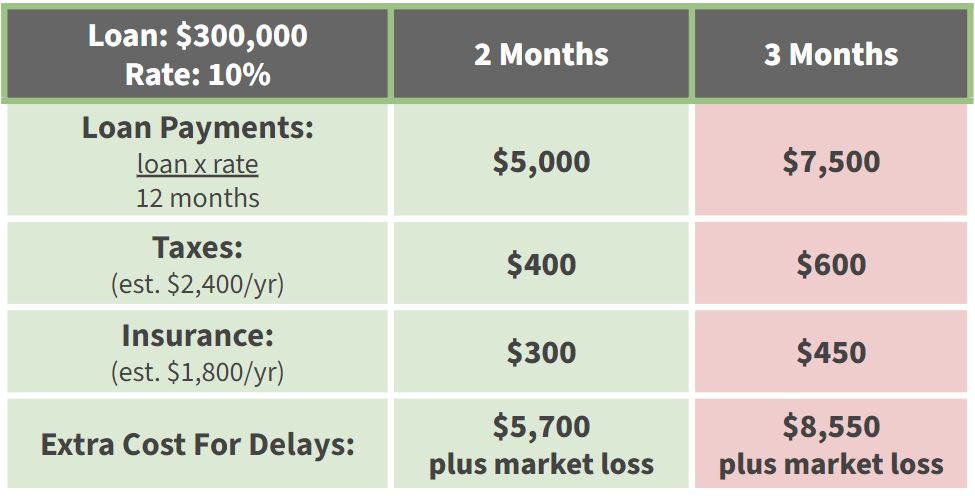
Let’s look at some real numbers you might encounter if you were struggling with a stalled project:

For even a two month delay, a project can easily cost $5,700 in payments alone. 

Let’s consider the fact that this investor also likely missed the peak market. If they were hoping to sell this property for $400,000, then decreasing the asking price by 5% would immediately result in a $20,000 market loss. 

That is both discouraging and super costly… but it’s also avoidable with the right kind of loan.

How Does Hard Money Help?

If your project is 60-70% complete and you just need a loan to help you cross the finish line, hard money loans might be right for you.

These loans are flexible. Because you’re not looking to pay off the full amount, only cover the last leg of the project, it’s typically easy to work out a deal with a lender.

A Finish a Project loan does not take over everything. It doesn’t refinance the project. They’re designed to help you complete what you’ve started as quickly as possible. That way you don’t miss out on the market or get stuck with months of additional payments. 

Looking for a Finish a Project Loan?

If you’re interested in a Finish a Project loan, reach out to us! You can check out our page about these particular loans or contact us at Info@HardMoneyMike.com.

We’re more than happy to discuss your options and help you find the right path towards your success.

Happy investing!

Top 5 Hard Money Loan Options

What types of hard money loan options are out there for real estate investors?

Hard money (sometimes called private money) loans are often the key to getting started in real estate investing. 

Most hard money lenders have a lot of options and many even have particular specialties. This article explains what’s out there so you’re equipped to have discussions with lenders.

Here are the top five loans that you’ll encounter in the hard money industry.

1. Fix and Flip Loan

The nice thing about a fix and flip loan is that it has everything to do with the property. Even if you’re less experienced as an investor, if the property has potential, hard money lenders will listen.

If the value is there, hard money lenders could fund up to 100%.

2. Bridge Loans

You’ll typically use a bridge loan to either purchase or refinance a project. There are a few places where they generally show up:

Bridging Gaps Between Projects

If you’re currently working on a project but you come across another great deal, a bridge loan can tap into that equity. You can use this money this as an opportunity to efficiently line up your next project.

A bridge loan would put a small lien on a property that’s about to go up for sale (or is currently being sold) which gives you money to purchase your next project.

Finishing and Buying Properties

Hard money moves more quickly than large, standard bank loans. If the clock is ticking and you need to either pay or lose the deal, a hard money bridge loan can save the day.

Wholetailing

Bridge loans can also work as a crucial part of wholetailing. Wholetailing involves anything from purchasing a discounted property and performing basic fixes to outsourcing renovations altogether. 

Typically, wholetailing only requires simple funding, often 60-90-day loans.

3. Gap Loans

You can explore gap funding to cover all sorts of money holes that might show up as you go through a project:

  • Down payments
  • Getting a project started (consider funding for escrow draws)
  • Completing a project
  • Carrying project expenses (like HOA fees)

You can even use gap loans to pay off old investors if you have someone who’s ready to move on. Treat your investors well and make sure you have the financial flexibility to let them out if they need.

4. Usage Loan

A usage loan is a private non-reporting loan that helps you pay off your credit card balances. If you’re using your personal credit card for business, this can be an important way to raise your credit score.

Real estate investing is all about leverage, and a lot of banks see your credit score as a reflection of your ability to use leverage well. 

The higher your credit score, the better terms you’ll often find for loans. 

5. BRRRR “Buy” Loan

The two big ticket items in the BRRRR method are 1) the purchase, and 2) the refinance.

Hard money loans come into play on the purchase side of a BRRRR. Because hard money is so flexible, it can also often fund a good portion of the rehab. 

Questions?

These are the top five hard money loan options, but if you’re looking for something else, just ask! Remember, hard money lenders are often smaller companies and individuals. They all have preferences and specialties, so get to know them and let them get to know your project.

If you’re interested in learning more, check out the free tools on our website or our YouTube channel where we discuss other tips and tricks for successful investing.

You’re always welcome to reach out to us at Info@HardMoneyMike.com if you have any questions or would like to discuss a deal.

Happy investing!

Why You Shouldn’t Use a DSCR Loan for a Fix and Flip

A DSCR loan is great for rentals, but why don’t they work for flips?

DSCR loans definitely have their place in the real estate investor’s arsenal. But if you’re trying to do a fix and flip, this loan might not be the right fit for you.

How Does a DSCR Loan Work?

DSCR stands for Debt-Service Coverage Ratio and is a loan particularly suited for rental properties. Like any other traditional loan, a DSCR is able to fund up to 80% of the purchase price or appraisal, whichever is lower.

For example, if you have a $200,000 property, the DSCR will cover up to $160,000 (80% of the total purchase price). This leaves $40,000 left for you to cover on your own.

As mentioned above, this loan is very well-suited for properties that generate steady cash flow (like a rental), but they can be more difficult to work with in the fix and flip game.

Why You Shouldn’t Use DSCR for Flips

You Need to be Rent Ready to Get a DSCR

In order to qualify for a DSCR appraisal, a property must be rent ready. This creates a lot of hurdles in the fix and flip world since many flippers are doing more than basic cosmetic repairs. 

DSCRs Have Prepayment Penalties

Most DSCR loans come with prepay penalties. These penalties typically come in 3- or 5-year plans. Again, in a rental market where you’ll be holding onto the property for longer amounts of time, you typically don’t need to worry about the prepay. 

However, the fix and flip market moves quickly. DSCRs penalize investors who pay off these loans quickly, something fix and flip investors often work towards.

You’ll Pay More For Rehab

In addition to the remainder of the purchase price, DSCRs don’t cover renovation costs. This means that even more money will need to come out of your pocket. 

Make Sure Your Loan Fits the Project

DSCRs are a great product for rental properties. However, if you’re looking at doing a fix and flip, take a look at other types of loans.

The most flexible loans are going to be hard money (also called private money) loans. 

We have a ton of free tools on our website that can help you find the right loan to fit your project. We’re also happy to chat with you about any particular deals or questions you have. 

Just reach out to us at Info@HardMoneyMike.com.

Hard Money Lending: 9 Things You Should Know

What should you know about hard money lending before looking for your first deal?

The real estate investing world revolves around using other people’s money strategically to build wealth for you and your family. If you’re new to the table, it can be tricky to get Wall Street companies to back your deals, but hard money lending is a different game. 

If you’re new to real estate investing, chances are hard money loans (also called Private Money Loans) are going to be the key to your success. 

Here are 9 ways that hard money lending is a unique and great option for new investors. 

1. Hard Money Lenders Tend To Be Relational and Local

Most hard money lenders are relational. Hard money lenders are frequently either individuals or smaller companies, so personal connection really does matter.

They like to invest in their local communities in projects that will help build the local economy. Even if you’re a new investor, by building a good relationship with small, local lenders, you can still find the finances you need.

2. Loans Are Not Score-Based

Unlike large banks, hard money lenders aren’t tied to particular credit scores. 

You should still be honest with your lender, but the score typically matters less than the type of project and the LTV (loan to value).

3. Terms Are Not Based on Experience

In hard money lending, deals aren’t usually based on experience. Instead, lenders look closely at the individual deals. 

If a particular deal has a good chance of creating wealth, you’ll likely find an investor.

4. Hard Money Lending is Flexible

If you have a unique property or project that falls outside of what larger banks will back, it’s probably a good option for hard money.

Flexibility is one of the most important distinctions with hard money lending. If the LTV is good and that lender wants to invest in that area, you’ve got a good chance of making a great deal.

5. Hard Money Can Fund More

Hard money loans can actually fund up to 100% of your project depending on the LTV. 

If you’re strategic about the projects you take on, you can increase your leverage by choosing good properties and going through a hard money lender. 

6. It’s Fast!

Hard money lending is fast. 

Typically, you can close deals in days instead of weeks. Because the real estate market moves fast, this can be a great option to make sure you’re not missing out because of slow lenders.

7. You Can Do a Lot with Hard Money

You can use hard money for all sorts of things. From gap funding to purchasing costs to usage loans that raise your credit score, hard money isn’t limited to only one aspect of investing. 

It’s good to find multiple hard money lenders in your area because a lot of them have expertise in particular areas.

8. Use it to Pre-Fund Escrow

One of the great things about hard money is that you can use it to help get projects moving. Because escrow typically works as a reimbursement system, you usually need to personally fund your first (and sometimes second) escrow draw. 

Especially as a new investor, the first few escrow draws can be a huge strain financially. 

With the flexibility of hard money lending, you can use that loan to cover those draws. Then, once you’re able to access those escrow funds, you can pay off the hard money loan. 

9. Hard Money Lending Comes in all Sizes

As mentioned earlier, hard money lenders are sometimes willing to fund up to 100% of the purchase cost. 

They’ll frequently fund $50,000 or $110,000 loans whereas a lot of the big equity firms don’t really like this size loan. 

Time to Invest!

If you’re new to investing, remember that leverage is king. Leverage—the way you use other people’s money—is how you generate wealth and income.

Reach out and find the local hard money lenders in your community. 

We have a few tools on our website that can help you find resources in your area. Check out our location pages to find hard money resources in your area. You can also download our free Loan Cost Optimizer to help you compare different loan options.

As always, feel free to check out our YouTube channel or reach out to us at Info@HardMoneyMike.com for more information.

Happy investing!

How to Get Approved by Hard Money Lenders

Knowing what hard money lenders look for is key to winning the real estate investment game.

Real estate investing is all about creating wealth and income by leveraging other people’s money. 

Hard money loans (also sometimes called private money loans) are a crucial part of that money.

What is a Hard Money Loan? 

A hard money loan is a loan based mainly on the property or the investment that you’re working on. It’s less focused on the investors themselves, as hard money lenders tend to look more at the property and LTVs (loan to value). 

Hard money lenders look for great deals. If a project is a good deal for you, you’ll likely find lenders willing to back you up.

Another benefit of a hard money loan is its flexibility. Hard money lenders allow higher loan to values and, depending on the property, sometimes will lend up to 100% of the total cost.

This is super important for new investors who need money to get started.

When to use a Hard Money Loan?

There are all sorts of loan options out there, but hard money is particularly useful in a few scenarios:

  • Closing quickly: Hard money loans are a lot faster to come by than traditional bank loans.
  • Unique Projects: Private lenders aren’t bound by the same restrictions as large firms.
  • Higher Loan to Value: If your deal needs a higher LTV, hard money can be the best deal.
  • Credit Score Trouble: Hard money lenders are more concerned with the value of the property than your personal credit score. You can also use a hard money loan as a usage loan to raise your credit score. 

How to Find the Perfect Hard Money Lender

Since hard money lenders are often smaller, private individuals or companies, it can take some work to find the right fit for you. 

If you’re starting with a Google search, know that local lenders likely won’t appear on the first page with the paid promotions from large banks. Click through a few pages of results to find what you’re actually looking for.

1. Look For Local Hard Money Lenders

Hard money lenders gravitate towards local markets in smaller communities. You can check out our location pages to learn more about resources we’re connected to in your local area. 

Finding local real estate investment groups can be a good way to start making connections.

Also, engaging with online forums like ones on BiggerPockets can help you find other investors and lenders in your area.

Local connection goes a long way in the hard money game, and you’ll need to take time to network in your area.

2. Create Relationships

Private money lenders are often very relational. 

Because of this, you’ll need to take time to call and talk to them. Make sure they know that you know what you’re doing.

Learn the language to help build their confidence in you and your project. 

Additionally, some lenders may even ask to see the property you’re asking them to invest in. Making sure you give them all the information they ask for is critical in your relationship with them. 

Similarly, just like they’re trying to determine whether you’re the right fit for them, you should also look at multiple lenders. The relationship between lenders and investors is a two-way street, and it’s important both of you feel confident about the deal.

3. Make Them Feel Comfortable

Remember that hard money lenders are typically individuals or small companies. Each loan is important to them.

Let them see your numbers. Let them see an example deal. Even if you’re just starting out, show them an example of potential loan to values, and be prepared to show your work.

The more you know about your contractors, purchase price, rehab costs, etc., the more you’ll ease their concerns.

Although it takes time to prepare this information, it can make a huge difference. This is your business, and doing that preparation shows your lenders that you’re competent at your part of the job. 

4. Make it Easy for Your Lenders

Finally, don’t make your lender chase you down to follow up. Have everything ready before they ask and pass it along early in the process.

Prepare a package ahead of time that has all the necessary information enclosed to the best of your ability:

  • Comps
  • ARV info
  • Scope and timeline of work
  • Team members
  • Contractors
  • Realtors
  • Insurance agent
  • Title info

The easier you make it for your lender, the more likely they’ll offer you a great deal.  

Show them that you know exactly what and how to break down a property and that the equity is there. This lets them know their loan is protected by a solid property with a good plan for generating income.

Questions?

Hard money lending is all about relationships. If you build a good relationship, you’re far more likely to find the lenders you need.

We have a few tools that can help you shop around for the perfect hard money loan. The first is our location pages. You can use these to find resources in your area.

The other tool we recommend is our free Loan Cost Optimizer download. It’s easy to use, and it can help you compare different lenders to find the best deals.

If you’re interested in a hard money loan or have questions about how to find lenders in your area, feel free to reach out to us at Info@HardMoneyMike.com.

How to Use Escrow for Your Real Estate Deals

If you’re new to the real estate game, learning how to use escrow is a critical step towards success.

Everyone in the fix and flip game is likely going to encounter escrows.

A popular strategy is to use private (or hard money) loans. These can be helpful because they can fund up to 100% of your rehab and are super flexible.

The tricky thing (and where escrows come up) is that a lot of lenders require that you start the project with your own money, reimbursing you later through escrow.

This can become a problem for beginning real estate investors if they’re not prepared to pay that much on the front end. 

Where do you get the money? How and when do you actually access the escrow funds?

How Does Escrow Work?

Think of escrow as a reimbursement program. Lenders lock a certain amount in the escrow fund and you submit draw requests throughout your project.

You’ll likely need an additional $50,000 (from your own pocket) to get the project going to submit the first draw (essentially, reimbursement) request. In order to keep things moving, you should also try to have pocket cash for the second draw as well.

It looks a bit like this:

Week 1:

  • Put your own money in to start project
  • At the end of the week, submit your 1st escrow draw to your lender

The lender might take some time to go through their verification process, so you should prepare for a week two along these lines:

Week 2:

  • Lender begins reviewing 1st draw request
  • You keep moving forward with your project, paying with your own money bucket
  • At the end of the week, you submit your 2nd draw request
  • Lender reimburses 1st draw and begins reviewing 2nd

Hopefully after the first two draws, you won’t need any more out-of-pocket cash. 

Also, remember that those initial draws are covered, you just need the money up front, and then they reimburse you out of escrow. 

How to Get Initial Funds to Access Escrow

You need a full money bucket – a supply of personal funds you can use for those out-of-pocket expenses.

How can you make sure you’re money-prepared before you get into this? 

1. Business Credit Cards

If you can, get business credit cards. Business cards are a great way to protect your personal credit score. Also, if you’re smart about choosing a 0% card, you could go through the whole process without paying any additional interest.

If you have questions about setting up your business credit cards, check out The Cash Flow Company, our sister company that specializes in money-preparedness.

2. Lines of Credit

We recommend business lines of credit or, at the very lest, HELOCs on your home. The most important thing is to keep your projects going, and having a variety of lines of credit is going to help.

To learn more about bank lines or HELOCs, check out this article from The Cash Flow Company.

3. Other People’s Money (OPM)

You can look to family, friends, neighbors, acquaintances, anybody out there who’s looking to put some money to work. 

Even smaller amounts like $25,000 will make a significant difference, and you can offer a better rate than larger banks.

OPM is a crucial piece of filling your money bucket for those initial draws, and it’s also a relatively safe investment for people around you.

4. Gap Funding

Gap funding refers to any loan you get to fill a gap in your project. 

Lenders still look for security in the loan, but if you’re able to show security, gap funding is another possibility for paying for those first escrow draws. 

Hard money loans can often be used as gap funding, and you’re welcome to reach out to use if you want to discuss a deal with us at Hard Money Mike.

You’re Ready to Use Escrow Funding!

Having a full money bucket at the front end makes a huge difference in your success as an investor. Markets move fast, and stalled projects can end up costing more than they’re worth. 

These strategies can fill your money bucket and help you access escrow quickly and successfully.

If you have any questions, feel free to reach out to us at Info@HardMoneyMike.com. You can also contact our sister company at Info@TheCashFlowCompany.com to discuss business credit cards or other aspects of being money-ready.

Also, check out the free tools, calculators, and information on our website. Our only goal is to help you be successful on your investment journey.

Happy investing!

BRRRR Strategy: Successful Real Estate Investing with Hard Money and DSCR

How can you combine a BRRRR strategy with hard money and DSCR loans to win in the real estate game?

It’s amazing that there are options out there that let you build a real estate portfolio using little to no money. Using the BRRRR strategy with resources like hard money and DSCR loans lets even new investors get ahead. 

Using BRRRRs, hard money, and DSCRs together lets you do your fix and flips with little to no money in. 

Although this takes work, it is a tried-and-true method of generating wealth with solid resources and hard work. 

What is the BRRRR Strategy?

BiggerPockets launched this acronym a few years ago. BRRRR (Buy, Rehab, Rent, Refinance, Repeat) centers around fixing and flipping discounted properties.

BRRRR is all about buying properties with built-in equity that can be renovated to raise the value. We’ll likely start seeing more discounted properties in 2024 as foreclosures rise. This will provide a perfect landscape for BRRRRs. 

We recently helped a client buy seven properties this year thal all fit in these guidelines. They bought the properties with private money, and they’re refinancing them with a DSCR product. 

But it all starts with the Buy: look out for discounted properties. Yes, it takes work to rehab, rent, refinance, and repeat. However, by using the BRRRR strategy, you and clients like the one above are able to maximize profits in your real estate investment journey. 

Where Does Hard Money Come into Play?

Beginning the BRRRR process with buying a new property typically requires a lot of money. But don’t panic!

At the beginning of the article, we told you that you could use the BRRRR strategy with little to no out of pocket costs, and we’re about to tell you how.

Hard money loans are the key to making it all happen. Hard money is super flexible so you can use those loans to not only purchase, but also rehab or even cover closing costs. 

At Hard Money Mike, we specialize in hard money loans.

Hard money lenders typically look at your loan to value (LTV). It’s great if your LTVs can be close to 75%, but you’re welcome to reach out if you have any questions or concerns about whether you might qualify for a hard money loan.

Using DSCR to Refinance Your BRRRRs

Getting your property refinanced is a crucial step in the BRRRR strategy. 

DSCR (Debt Service Coverage Ratio) was specifically developed for real estate investors. The benefit of DSCR is that lenders aren’t concerned with your business’s income. 

Instead, they look at the specific property to see if it has positive cash flow. If it does and you have good credit, you’ll likely be able to refinance your hard money loan 75%-80% of the current appraised value.

If you bought at a discounted rate but rehabbed the property, the new value should be closer to everything else in the neighborhood.

BRRRR Strategy + Hard Money + DSCR = Success!

You need all three of these to really be successful at building your real estate wealth from little to no money.

Beginning your real estate investing journey can be a slow process. The first year, you might only complete the BRRRR strategy for one or two properties. 

But the longer you do this, the easier it gets. As you understand more, you develop contacts, and everything gets easier. 

Realistically, if you’re looking to build wealth from real estate investing but don’t have extra cash on the front end, you could likely use the BRRRR strategy on up to ten properties over the next three years.

By using the resources available (like BRRRRs, hard money, and DSCRs) you can build up your portfolio and wealth with hard work.

Time to Make Some Deals

Remember, it all starts with buying discounted properties with hard money loans. Then, keep using hard money for rehab, and refinance with DSCRs. 

If you want to learn more, we have a ton of free tools that can help you in the real estate game. 

If you have questions about hard money or want to discuss a deal, just reach out to us at Info@HardMoneyMike.com

You can also check out our YouTube channel for more real estate investment strategies and tips. 

Happy Investing.

Private Money Loans: 5 Tips to Find the Safest Loan

What should you look for when considering private money loans?

Real estate investing is one of the most lucrative markets out there. It’s still creating millionaires and opening the door for families to build generational wealth. But how can you get your foot in the door?

Especially if you’re a newer investor, we’re here to help you figure out how to do this by finding the right lender for you.

Why Private Money Loans? 

Private money loans—also often called hard money loans—are particularly helpful in real estate investing. These particular loans are more flexible which make them perfect for unique projects or projects in rural areas that larger banks may see as less valuable.

If you’re in real estate, you understand that leverage is king. Hard money is an important part of that leverage. However, even as you’re looking for private loans, make sure you shop around so that you can negotiate the best deal possible.

But how can you go about finding a good private money loan? 

1. Shop Around for Loans

No matter where you are in your real estate career, you should always shop around. Even if you’ve had a good experience with a lender in the past, still look around to see if you can find better deals. 

Talk to different lenders. Especially with hard money, each lender will typically have a specialty. This means that each project you do might fit best with a different lender.

This can feel overwhelming, so we’ve created a free tool called the loan cost optimizer. It’s easy to use and can help you find a better deal for your project.

2. Ask For Referrals

If you ask Google to find a good lender, two things are going to happen: First, you’re overwhelmed by the sheer number of options. Second, the ones you’re most likely to see will be paid promotions or paid advertisements.

One of the best ways to avoid this is by asking for referrals. If you know other people in your area who are in the real estate game, ask about their experiences with their lenders. 

Did they charge what they said they were going to charge? How accurate was the lender’s original quote? Did they close on time? Was the contract solid?

Finding a good lender is about more than the on-paper costs. You want a lender who’s reliable and trustworthy, just like they want reliable clients. 

3. Check the Reviews

If you can’t get a referral from someone, the next best thing (and something you should do regardless) is to check the reviews.

Platforms like Google have made it super easy for people to leave reviews for companies. Check out what people are saying. 

Although reviews aren’t always entirely accurate, if a private money lender has a lot of negative reviews about trying to change the terms of a loan, that could be an issue. 

4. Get The Private Money Loan Details in Writing

You don’t ever want to be stuck in a situation where you thought you had a specific agreement, but it doesn’t come through because it was just a verbal comment.

Make sure you get a clear terms sheet that outlines everything the lender said. If you have other important conversations, ask to get an outline of that conversation in writing. Even an email works!

5. Review All Paperwork Carefully

If possible, find a lender who will provide the settlement statement a day or two before closing so you don’t have any surprises. This gives you time to review the paperwork carefully before finalizing the deal. 

Always make sure you know the default rates and other potential charges that might show up. Even if you don’t expect delays in your projects (no one does), read all that fine print carefully so you know the facts.

If You Want Additional Help… Ask Us!

Here at Hard Money Mike we specialize in private money loans. These loans are flexible and perfect for investors working in smaller communities, but it can take some time to find the right loan for you.

If you want a quote, have questions, or want to learn more about private money loans, reach out to us at Info@HardMoneyMike.com