
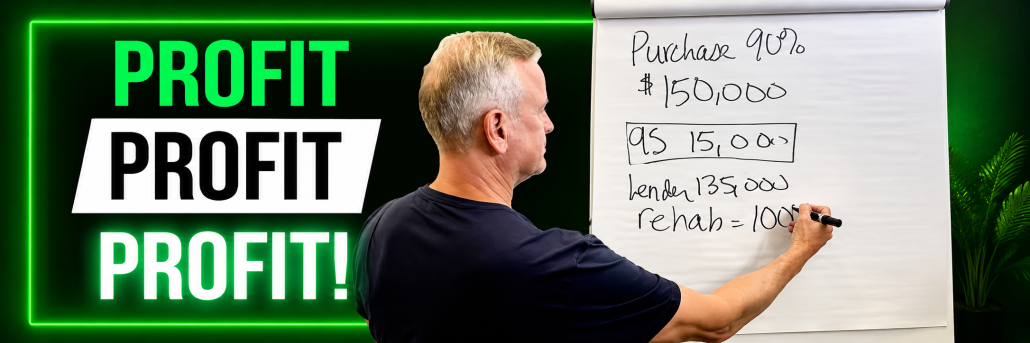
The Fundamentals of Real Estate Investing: Profit Breakdown
When people first start flipping houses, they often think a lender simply hands them money to buy a property. However, that is not how a fix-and-flip loan works. Instead, money moves through several stages before, during, and after closing. That is why understanding The Fundamentals of Real Estate Investing: Profit Breakdown can help you avoid surprises and make better decisions. More importantly, it helps you plan your cash flow, protect your profits, and keep projects moving forward. Think of a fix-and-flip project like a series of money buckets. Some money comes from the lender. Meanwhile, some money comes from you. As a result, you need to know where every dollar goes before you start a deal.
In this guide, you will learn how funding works, what costs to expect, and how to calculate your real profit at the end of a project.
Understanding the Lender’s Role
Before looking at the numbers, it helps to understand what a lender typically funds. Most fix-and-flip lenders focus on two important numbers:
After Repair Value (ARV)
ARV is the estimated value of the property after all repairs are complete. As a general rule, many lenders want the total project cost to stay at or below 75% of the ARV. Therefore, this number helps protect both the lender and the investor.
For example:
- ARV = $260,000
- 75% of ARV = $195,000
If your purchase and rehab costs stay below $195,000, the deal may fit the lender’s guidelines.
Loan-to-Cost (LTC)
Loan-to-cost measures how much of the project the lender will fund.
For instance, a lender may offer:
- 90% of the purchase price
- 100% of the rehab budget
As a result, the lender may cover most of the project costs, but you still need money available for other expenses.
Furthermore, most fix-and-flip loans are:
- Short-term loans
- Usually 6 to 12 months
- Interest-only payments
- Designed specifically for renovation projects
Because of this, speed matters. The faster you finish and sell the property, the more profit you usually keep.
The Five Stages of Funding
Successful investors understand where money flows during every stage of a deal.
These stages include:
- Pre-Closing
- Closing
- Post-Closing
- Pre-Sale
- Sale and Profit Collection
Let’s look at each stage.
Stage 1: Pre-Closing Costs
Pre-closing happens after you put a property under contract but before you officially buy it. During this stage, several costs may appear.
Earnest Money Deposit
An earnest money deposit shows the seller you are serious about buying the property.
Example:
- Earnest money deposit = $2,000
This money comes from your funds, not the lender’s funds.
Inspection Costs
Some investors order inspections to uncover hidden issues.
For example, an inspection may reveal:
- Plumbing problems
- Foundation issues
- Electrical concerns
- Sewer line damage
Example cost:
- Inspection = $500
Property Valuation or Appraisal
Lenders usually require a valuation before approving the loan.
Example cost:
- Valuation = $600
Total Pre-Closing Costs
In this example:
- Earnest money = $2,000
- Inspection = $500
- Valuation = $600
Total:
$3,100 out of pocket before closing
Therefore, investors need available funds long before the lender provides financing.
Stage 2: Closing Costs
Closing is when ownership officially transfers to you. At this point, both you and the lender bring money to the transaction.
Example Deal
Let’s use the following numbers:
- Purchase price = $150,000
- Rehab budget = $40,000
- ARV = $260,000
Total project cost:
$150,000 + $40,000 = $190,000
Since $190,000 is below the 75% ARV threshold of $195,000, the deal works within the guideline.
Lender Contribution
The lender funds:
- 90% of purchase = $135,000
- 100% of rehab = $40,000
Total loan:
$175,000
Investor Contribution
The investor provides:
- 10% down payment = $15,000
Additional Closing Costs
Besides the down payment, investors often pay:
Loan Costs
These may include:
- Origination fees
- Underwriting fees
- Processing fees
Example:
$5,000
Title and Closing Costs
These costs help ensure clear ownership.
Example:
$3,000
Insurance
Most lenders require insurance before closing.
Example:
$2,000
Total Closing Costs
- Down payment = $15,000
- Loan costs = $5,000
- Title costs = $3,000
- Insurance = $2,000
Total:
$25,000
When combined with pre-closing expenses, the investor has already contributed:
$25,000 + $3,100 = $28,100
Stage 3: Post-Closing Costs
Many new investors overlook this stage. However, these expenses can significantly affect profits.
Rehab Pre-Funding
Sometimes materials must be ordered immediately.
Examples include:
- Windows
- Doors
- Roofing materials
- HVAC systems
- Cabinets
Although the lender may reimburse approved rehab expenses later, investors often pay deposits first. As a result, many investors keep access to:
- 20% to 40% of the rehab budget
In this example:
- Rehab budget = $40,000
- Recommended available funds = $8,000 to $16,000
This money keeps the project moving.
Monthly Carrying Costs
Every month a property remains unsold creates additional expenses.
Common carrying costs include:
- Interest payments
- Utilities
- HOA fees
- Property maintenance
Interest Payment Example
Loan amount:
$175,000
Interest rate:
10%
Annual interest:
$17,500
Monthly interest:
$17,500 ÷ 12 = approximately $1,460
Utilities
Example:
$340 per month
Total monthly carrying cost:
$1,460 + $340 = $1,800
If the project lasts four months:
$1,800 × 4 = $7,200
Therefore, delays directly reduce profits.
Why Speed Matters in Real Estate Investing
Every extra month costs money. For example, if a project drags on for six more months, carrying costs continue to grow. Meanwhile, stress often increases.
Because of this, experienced investors focus on:
- Fast renovations
- Quick decision-making
- Strong contractor management
- Proper funding preparation
Simply put, speed protects profit.
Stage 4: Preparing to Sell
Before listing the property, investors often spend money on final touches.
These costs may include:
- Cleaning
- Photography
- Landscaping
- Staging
- Minor repairs
Although these costs seem small, they can improve buyer interest and help properties sell faster. As a result, many investors view these expenses as investments rather than costs.
Stage 5: Selling the Property and Calculating Profit
Now let’s follow the money all the way to the finish line.
Sale Price
The renovated property sells for:
$260,000
Selling Expenses
Common selling costs include:
- Agent commissions
- Title fees
- Transfer taxes
After these expenses, the investor receives approximately:
$247,000
Pay Off the Loan
The lender receives:
- Principal balance = $175,000
- Remaining interest and fees = $1,000
Total payoff:
$176,000
Remaining Funds
$247,000 − $176,000 = $71,000
At first glance, it may seem like a $71,000 profit.
However, there is one more step.
Subtract Your Cash Investment
Earlier, the investor contributed:
- Pre-closing costs
- Closing costs
- Carrying costs
Total investment:
$35,300
Now subtract that amount:
$71,000 − $35,300 = $35,700
Final Net Profit
$35,700
This is the money left after all project expenses and loan obligations are paid.
What Is a Good Fix-and-Flip Profit?
Many investors aim for a net profit equal to roughly 10% to 15% of the ARV.
Using the example above:
- ARV = $260,000
- Target profit range = $26,000 to $39,000
The example profit of $35,700 falls within that target range. Therefore, the deal produces a healthy return.
Key Lessons from The Fundamentals of Real Estate Investing: Profit Breakdown
Successful investors understand more than just purchase prices. They also understand cash flow. As you evaluate deals, remember these lessons:
- Budget for pre-closing costs.
- Plan for closing expenses.
- Prepare for monthly carrying costs.
- Keep funds available for rehab deposits.
- Track every dollar invested.
- Focus on speed whenever possible.
- Calculate net profit instead of gross profit.
Most importantly, treat every project like a business. When you understand where the money goes, you can make smarter decisions and avoid costly surprises.
Conclusion
The biggest mistake many new investors make is focusing only on the purchase price and sale price. However, real profit comes from understanding every stage of the funding process.
That is why The Fundamentals of Real Estate Investing: Profit Breakdown matters so much. When you understand pre-closing costs, closing costs, carrying costs, lender requirements, and profit calculations, you can approach each deal with confidence.
Furthermore, proper planning helps projects move faster. As a result, you can protect your margins, reduce stress, and build a stronger real estate investing business over time.
Watch our most recent video about: The Fundamentals of Real Estate Investing: Profit Breakdown






Leave a Reply
Want to join the discussion?Feel free to contribute!