You can hit it out of the park and claim victory…or strike out and lose.
When you win the credit score game, you win countless opportunities.
These include affordable rates, more loan options, and, in the end, hundreds of thousands of dollars. In this video, we discuss 3 EASY ways to boost your credit score…and your cash flow!
Learn more about how credit can fuel your investments on our YouTube Playlist.
WHO WE ARE ======================== Hard money loans are a necessity for most real estate investors. Mike Bonn and his team make them easy! For 21+ years, Hard Money Mike has provided topnotch lending services to real estate investors across the United States. We offer the best options in private lending for fix and flips, rentals, and other value-add properties. Plus, we can fund bridge loans in 10 days or less! If you’re looking for quality, FAST loans with the highest loan-to-values and best rates, then our team is ready to help. No experience required!
Making money with your credit score.
https://hardmoneymike.com/wp-content/uploads/2022/05/making-money-with-your-credit-score-1.jpg281600Mike Bhttps://hardmoneymike.com/wp-content/uploads/2019/06/hard-money-mike-logo.pngMike B2022-05-12 17:13:042022-06-18 13:22:29Making money with your credit score.
Not money from a broker or mortgage company or hard money lender. Money from real people to fund your flips and make your investments faster, easier, and more profitable.
OPM vs Private Money
What’s the difference between private money and Other People’s Money? Aren’t they the same thing? Yes and no. They’re related, but there are a few key differences.
Private money is often called “hard money.” It involves going through a broker or a company like Hard Money Mike that lends you private money.
OPM does the same thing, but it’s strictly peer-to-peer, person-to-person. It is private money because it’s a loan outside of a bank. It’s not hard money because you’re not going through a formal company or filling out applications.
What is OPM?
OPM is simple: one person has money and needs a smart place to put it, and one person has a promising property investment but no money to put into it. They form a peer-to-peer transaction.
Both people have the chance to benefit more than they would if they went through a bank. The person with the money gets a simple investment with typically a much higher return than the banks would pay. And the person who needs the money can get it cheaper, faster, and keep it more fluid. Both can end up more profitable and successful.
Taking the OPM route may feel non-traditional from a modern perspective, but historically, it’s the way things have always gotten done. One person has something, another person needs it, so they create a deal where they both benefit.
Want More Details on Setting Up OPM?
Hard Money Mike doesn’t need to be involved with your OPM deals to offer help. We have resources to help you learn how to best set up OPM deals:
https://hardmoneymike.com/wp-content/uploads/2022/05/how-can-opm-benefit-your-real-estate-investments.jpg446800Mike Bhttps://hardmoneymike.com/wp-content/uploads/2019/06/hard-money-mike-logo.pngMike B2022-05-09 11:38:132022-06-18 13:32:04How can OPM benefit your real estate investments?
If you want to maximize leverage in your investments, you need to know this key information about your credit score.
There’s nothing more disappointing than this…
You’ve searched everywhere, but can’t seem to find a decent loan.
Money keeps getting sucked away with high interest rates and down payments.
Even when you find good properties, you never seem to come out on top.
…But your real estate investment was supposed to help you start living your dreams.
What’s going wrong on the money side of your investments?
Your Credit Score Matters
Your credit score could be the number one thing holding you back.
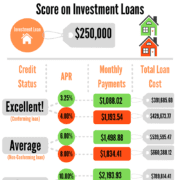
A credit score impacts cash flow from real estate investments. It determines interest rates, out-of-pocket costs, and what kinds of loans you can get.
With a low credit score, you’ll have:
Higher interest rates
Higher down payments
Fewer loan options available
What Is a Credit Score?
A credit score is a number between 0 and 850 that tells financial institutions whether or not it’s wise to lend to you.
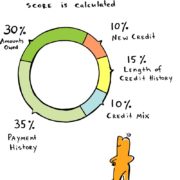
Your score is determined by several pieces of information about your finances.
But the two most important are payment history and accounts owed.
It comes down to:
Do you pay your credit cards and loans back on time?
And do you use less credit than is available to you?
What Should My Credit Score Be?
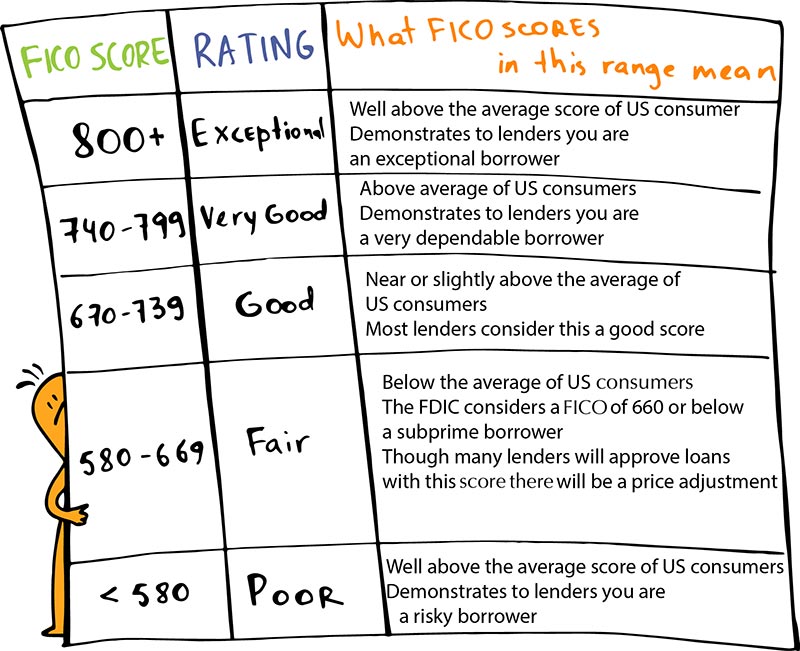
With a score of 800, you’re almost guaranteed to hear “yes” from any lender.
At 740 and higher, you’ll still have access to the best loans with the best rates.
Between 670-739 is still a good position, and you can get decent rates.
And a score below 670 will be detrimental to your real estate investing experience.
Lending credit scores
But if you’ve just realized you have a low credit score, don’t lose hope.
How Can My Credit Score Maximize My Leverage?
The higher your credit score, the higher your leverage. Lenders look for people with high credit scores. Having a better score will open up doors for you to find:
Better loans
More quickly than you would with a lower score
From a wider variety of financial institutions
Interest Rates
A good credit score will get you loans with better interest rates.
A significant amount of money can leak out of your deal from bad interest rates brought on by your credit score.
To put it in perspective: If you end up paying $500 per month on interest, that becomes $18,000 after three years. That’s $18,000 that could have been your profit that goes directly to the lender instead. With a better credit score, you can find a loan that keeps more of your money in your pocket.
Down Payment
Let’s say you found a great property for sale for $300,000. With good credit, you may only be asked to put 10% down – or potentially even 0%! With a lower credit score, though, you’ll likely be asked for a 20-25% down payment.
For the same $300,000 deal, good credit can mean the difference between paying $30,000 out-of-pocket or $70,000!
What To Do Next
Your credit score determines whether you take the easy road or the hard road with your real estate investing experience.
If you don’t already have a credit score of 800, focus on raising your credit score before anything else. Doing this will earn you:
Lower interest rates
Lower down payments
More loan options
A more successful investment!
It’s hard enough to find properties, find contractors, find tenants, find sellers… make it easier on yourself to find lenders.
We want to help you succeed in your investments.
For more help with understanding and improving your credit score as a real estate investor, check out these helpful videos on our YouTube Channel.
https://hardmoneymike.com/wp-content/uploads/2022/05/The-Impact-of-a-Credit-Score-on-Home-Loans-Big-opt.png1036800Mike Bhttps://hardmoneymike.com/wp-content/uploads/2019/06/hard-money-mike-logo.pngMike B2022-05-06 12:05:212022-06-18 13:49:33How Your Credit Score Impacts Your Real Estate Investments
Leveraging your real estate investments just got easier with these 3 quick ways to raise your credit score.
Maybe you’ve already noticed it.
Larger lenders are getting into the fix-and-flip hard money space. And many of these companies require credit scores as their underwriting criteria.
In this landscape, your credit score decides the speed and effectiveness of your journey to fix-and-flip financial freedom. Your credit score will determine your rates, leverage, and overall income from your real investments. Good or bad, your score impacts every step of your financial process.
So how can you raise your score in a short amount of time?
Three quick ways bump up your score are to:
Add more credit to your line.
Get authorized on someone else’s good credit account.
Go private – get money from somewhere else to pay off your debts long enough to apply for more credit.
If you would like to read the full article please click here.
https://hardmoneymike.com/wp-content/uploads/2022/05/how-real-estate-investors-can-quickly-raise-their-credit-score.jpg445800Mike Bhttps://hardmoneymike.com/wp-content/uploads/2019/06/hard-money-mike-logo.pngMike B2022-05-04 11:04:552022-06-18 13:56:15How real estate investors can quickly raise their credit score.
Is investing in Real Estate with Zero Down for real?
No money to put down on your first investment? That shouldn’t stop you.
Use these 3 tips to get started.
You don’t have enough savings. After all, flipping is how you want to start making money, right? And you want to begin that real estate investment journey now.
But if you don’t have the money to begin with… how are you even supposed to start?
We see people do it every day. Here are the 3 main ways people have made successful real estate careers with zero money down.
Get a HELOC
If you already own a house, the first tactic you should use to get money for real estate is to get a HELOC.
HELOC stands for “home equity line of credit.” It’s basically a second mortgage that works like a line of credit that you can use and pay off over and over again. You’re able to use it for multiple properties.
You could get a HELOC from credit unions or banks. We usually send our clients to credit unions because they tend to have better options for HELOCs. A credit union will likely give you:
A longer term
Fixed rates
A little more money
If you already own a home, go to a local credit union and ask them about a HELOC first.
Start a Partnership
But what if you don’t have a house, so you can’t get a HELOC? A partnership might be your next best option. There are two routes you can go.
Family or Friends
You can ask a family member or friend to be a money partner. They can provide you with the cash to use for a property’s down payment, or for the repairs of your flip.
The close and personal aspect of partnering with someone you know can be the best option for some people. In other cases, it’s nice to partner with a person or entity who’s not so personal.
Outside Partner
You could also look for an outside partner.
For example, Hard Money Mike partners with people who find good deals but don’t have the money to make that first purchase. We help them finance the whole amount so they can get into their first two or three deals. After letting us help fund their first three deals, most people come out with enough money to do their own down payment and repair costs on their next property, with no partner.
Beginning investors can make their business independent quickly when they seek out the right partner to get them started.
Use a credit card
Many people hesitate to use a credit card to fund their investments – for good reason. But when done right, a 0% credit card can be the simplest way to start investing with no money down.
What are the wrong ways to use a credit card for a fix-and-flip?
Getting a credit card with a high APR.
Using the card to go out and have fun.
Not paying back the charges you put on the card.
If you’re smart, it can be easy to use a credit card the right way. Start with a 0% APR card. Understand that it’s a tool for your business, so treat it that way. Only use the card for repairs, contractors, and other costs associated with your flip.
Take out the money, sell the property, then clear the card back to zero before moving onto your next project. Don’t let the debt accumulate. Don’t keep a balance from deal to deal. This is where credit card use falls through for most investors. They don’t use the money from the sale to fully pay off the card, and it gets out of hand fast.
But if you do it right, a credit card works as a great way to help beginners get the funds needed to start in real estate.
What Are Other Ways to Investing in Real Estate with Zero Down?
Clients come to us wanting to get into real estate but think they need money in the bank. That’s not always the case.
Here are the 3 key ways we see people start their investments with no money:
If you already have a mortgage, get a HELOC.
Start with money from family, a friend, or an outside partner.
Use a 0% credit card to fund the costs of your investment.
These aren’t the only ways we’ve seen people succeed with a new real estate career.
https://hardmoneymike.com/wp-content/uploads/2022/05/3-ways-to-start-investing-in-real-estate-with-zero-down.jpg267800Mike Bhttps://hardmoneymike.com/wp-content/uploads/2019/06/hard-money-mike-logo.pngMike B2022-05-01 13:30:302022-06-18 14:10:233 Ways to Start Investing in Real Estate with Zero Down
If you want to make the most money on your real estate deals, then you need to create a solid team.
And some excellent members to add to your team are investor-friendly realtors.
But, why do realtors make such great team members for real estate investors?
Well, first of all, they have a constant pulse on the market.
They know what’s happening, where it’s happening, and how it’s happening.
Second, discounted properties also tend to fall into their laps, and they can pass those properties on to you.
So, what type of realtor should you work with?
Well, they should do more than put you on their MLS drip. Any realtor can do this, and nowadays, many of the properties on the MLS get listed on sites like Redfin and Zillow.
So, getting on an MLS drip won’t help investors much…especially when we’re looking for under-market properties. And under-market properties aren’t found on the MLS often. The right kind of realtor will have a lot more hustle. They’ll actually search for under market properties and then go through the numbers to decide it’s worth investing in before they present it to you.
Better yet, investor-friendly realtors connect with professionals in various industries, like bankruptcy attorneys. That way, when investment properties pop up, they’ll be one of the first to know about it. And then tell you about it, rather than making you wait to—hopefully—see it on the MLS weeks or months later.
Most importantly, the right realtor will LOVE working with investors.
Unfortunately, about 95% of the realtors do NOT like working with investors. Or, if they do, it’s part-time and not a high priority for them. These are usually more experienced realtors who have an established client list. They don’t really need your business to make money. They already have a system in place.
But, when you find realtors who are investor-friendly, you’ll know. You won’t be a side gig or a part-time project for them. They’ll be hungry to help you find investment properties and make a lot of money.
Many times, these are newer agents who are willing to be trained. They’ll be the ones looking for business and finding ways to make money with you, not off of you. So, rather than selling 3-5 properties a year, they want to sell an investment property every month.
Now, is it a bad idea to team up with both experienced and new realtors?
Not at all.
In fact, it’s a great idea to work with multiple realtors, because they all have different resources, experiences, and ideas. Plus, if one moves away or quits their job, you don’t need to worry about losing your main resource for finding properties. You’ll have others to fill in the gap.
If you want to create a smooth, easy system with your investment properties, then adding a realtor or two…or three…to your team is an excellent idea. Just make sure they like working with investors and are hungry to make money. The hungrier, the better for both of you!
Happy investing!
https://hardmoneymike.com/wp-content/uploads/2022/02/Why-Realtors-Make-Good-Team-Members.jpg267800Jenna Weldonhttps://hardmoneymike.com/wp-content/uploads/2019/06/hard-money-mike-logo.pngJenna Weldon2022-02-21 09:30:442022-06-18 14:14:42Why Realtors Make Good Team Members
Because we care about our clients and anyone else who decides to invest in real estate.
So, here’s the brutal truth: there are people who will lie to you in this industry. Lenders, realtors, other investors, and so on. Or only tell you half-truths.
I know. This is a HUGE surprise.
Okay, maybe not.
But, even if common sense and experience tells you that people lie, you can’t always believe it when it happens to you.
Why?
Because, more often than naught, you WANT something to be true, especially when it comes to making money. You want to believe you found an incredible deal, or an incredible lender, or an incredible something that nobody else has had the luck to find.
We all want those incredible moments to be true, right?
First, if it seems too good to be true, it probably is.
For example, “If you buy this property, then you can generate $5,000 – $6,000 every month.”
Okay, that’s definitely a red flag.
Sure, we all want to make excellent cash flow on our properties. But, even in our competitive market, it’s near impossible to make $5,000-$6,000 every month on a standard rental in most towns or cities. The norm is more like $200-$500 a month…at least until a property pays off.
But, even then, making $5,000 – $6,000 every month with a single property is…too good to be true.
Unfortunately, we’ve seen this situation happen more than once to our investors. They get convinced of a sweet, sweet deal and jump into it. And…it doesn’t take long for them to figure out the person who convinced them to buy the property streeetched the numbers and the truth…a lot.
So, what can you do when a red flag waves in your face?
Ask questions.
Okay, someone told you something that’s too good to be true. Now what?
That’s right: ask questions. A lot of them!
For example, let’s say a lender quotes you a 4% rate when everyone else is quoting you about 10%.
Your first reaction is to cheer and think, “That’s amazing! I’m so happy I called this lender.”
But your second reaction should be, “Wait, why? Why is this lender quoting me so much lower than everyone else? What do they see that the other lenders missed? Why are they so much more forgiving and accepting of my financial history?”
There’s gotta be a catch.
Trust us, there is.
When lenders give quotes that are significantly lower than their competitors, it’s because they pad the rest of the loan with junk fees. They charge for everything, not just the loan itself. So, before you know it, you’ll be paying more than the 10% interest you would’ve paid with one of the other legitimate, honest lenders.
So always ask questions when a red flag pops up.
And, part of that process includes…
Getting a second opinion.
So, a red flag went up. Then you asked the lender, realtor, seller, investor, or whoever a bunch of follow-up questions to figure out if they’re telling you the truth…or yanking your chain and taking advantage of you.
Sadly, even if you grill this person, you might not get a direct or honest answer from them.
So, go and get a second opinion. Heck, get a third opinion! There are plenty of experts in the field to ask. Go out and see what they think of this “too-good-to-be-true” offer. Is it real…or fake?
Spoiler alert: it’s probably fake.
By taking these simple steps, you can protect yourself and your wallet from falling into a bad situation.
Just remember:
If it’s too good to be true, ask questions and then get a second, third, or even fourth opinion. Do your due diligence to save yourself a lot of hassle…and money.
Happy investing!
https://hardmoneymike.com/wp-content/uploads/2022/02/How-to-Combat-Red-Flags-in-Real-Estate.jpg267800Jenna Weldonhttps://hardmoneymike.com/wp-content/uploads/2019/06/hard-money-mike-logo.pngJenna Weldon2022-02-14 10:00:242022-06-18 14:16:473 Ways to Combat Real Estate Red Flags
So, let’s say you’re eager to start investing in real estate, but you’re not quite ready to fix and flip or BRRRR. It’s just too big of a commitment or too much of a risk. Or both.
Basically, it’s driving for dollars. You hop in your car and drive around the neighborhood, city, or entire state and look for potential investment properties. You can even put on your best walking shoes and take a jaunt around your own neighborhood.
So, what does an investment property look like? Well, you should be able to tell it hasn’t been maintained. The paint is chipped, the windows are broken, the lawn overgrown, and so on. Or it’s vacant. Or there’s just something else is wrong with it that makes you think it can be sold at a discounted price.
Then, you collect information about the property. That means you can knock on the door and chat with the owner, take photos, and/or jot down the address. Once you do one or all these things, you can share it with potential buyers.
Buyers are usually wholesalers, investor-friendly realtors, flippers, or other real estate investors. They take the information you provide and follow-up with the owner to see if they’re actually interested in selling their property.
Essentially, you become the eyes and ears of the market.
So, what are some of the biggest benefits of bird dogging?
First off, it’s great for beginners who want to learn more about real estate investing. Maybe you’re not ready to flip or rent homes now, but you want to in the future. Bird dogging is a great introduction to both.
Unlike flipping and renting, bird dogging also doesn’t require any money to start. You don’t need to worry about classes, training, loans, or anything else that requires cash out of your own pocket.
Bird dogging is also something you can do when you have the time. So, it’s easy to fit into your schedule, be it during your lunch break, after you drop off the kids at school, or during your Sunday stroll. Really, whenever works for you!
Better yet, bird dogging can create multiple streams of income. You can make money when you find an investment property, when a wholesaler or realtor sells it to a flipper, and—if it’s a flipper—when they sell it after renovating it.
So, there you have it! Bird dogging is something you can do whenever and wherever. Just hop in your car or put on your shoes and go exploring. Find those properties that are in disrepair and share them with buyers.
https://hardmoneymike.com/wp-content/uploads/2022/02/How-to-Make-Money-Bird-Dogging.jpg267800Jenna Weldonhttps://hardmoneymike.com/wp-content/uploads/2019/06/hard-money-mike-logo.pngJenna Weldon2022-02-10 14:19:262022-06-18 14:18:53How to Make Money Bird Dogging
So, you’ve heard about the BRRRR method. You know it stands for Buy, Rehab, Rent, Refinance, and Repeat.
But do you know what each of these steps in the BRRRR method really mean? More importantly, do you know how to set each one up?
Because if you don’t, your success will be limited. Because you won’t be able to make as much money as you could by doing things right. Your monthly cash flow will be lower, your down payments will be higher…a lot higher…And your ability to repeat the process will much…much… slower.
So, let’s break things down, starting with the B in BRRRR.
But wait! Before you run out and buy the first property you find for sale, you need to know a few important—er, VERY important things. Because the B in BRRRR is one of the most crucial steps in the entire process. If you don’t buy strategically, then you might set yourself up for failure.
First you need to find under market properties that you can add value to.
Under market properties are not found on the MLS. They’re usually found through wholesalers and investor-friendly realtors. And they come at a nice, discounted price.
Just taking this step will do wonders for your wallet.
But it’s not the only thing.
You also need to work with the right lenders.
With BRRRR, there are two lenders involved. The first is for purchasing and renovating the property. The second is for refinancing into a cheaper, long-term loan.
For now, let’s focus on the first lender, for when you BUY the property.
Typically, this is a hard money or private lender. It’s not a bank or another traditional lender. Because those lenders usually require 10, 15, or even 20% down when you go to close. And, if you want the most bang for your buck, you should aim to put 0% down at closing. Because once you put money into a deal, it’s difficult to get it back out.
Hard money and private lenders can help you achieve this.
How? Because they let you maximize your LTV (loan-to-value) by lending up to 75% of the ARV (after repair value).
Ok, deep breath! We get it. This is starting to sound too complicated and confusing.
But trust us, it’s not. Just stick with it. You got this!
The right lender will give you a loan that is 75% of your ARV.
That means they will try to cover the full purchase price, plus part or all the rehab, closing, and holding costs. Basically, they will cover as much as the 75% allows so you don’t have to spend your own money.
And the less money you personally have to put into each deal, the faster you can repeat the BRRRR method. Because you’re not forced to wait until your bank account recovers to make another big down payment on another property.
Aiming for 75% of the ARV will also make a big impact on your refinance (the third R in the BRRRR method). But we’ll get to that later. Let’s stay focused on the B in BRRRR.
If you’re interested in trying the BRRRR Method, then it’s crucial you understand this first part of the process. If you buy an under-market property AND find a lender who can cover 75% of the ARV, then your success rate will be much, much higher. And your bank account will be a whole lot happier.
Happy investing!
https://hardmoneymike.com/wp-content/uploads/2022/01/How-to-Buy-Breaking-Down-BRRRR.jpg267800Jenna Weldonhttps://hardmoneymike.com/wp-content/uploads/2019/06/hard-money-mike-logo.pngJenna Weldon2022-01-31 07:35:272022-06-18 14:20:49How to Buy: Breaking Down BRRRR
There’s a reason why our team created this video for you. We’ve helped many clients succeed using the BRRRR method. But, just like you, many of those clients started their journey confused. Because they didn’t understand the entire process either.
And what they did understand wasn’t always accurate or true. Because they were working with bankers, lenders, or realtors who fed them misinformation or were simply out of the BRRRR loop.
#2: “Can you really find properties that work for BRRRR?”
Again, yes. Absolutely.
Even in our current, competitive market, there are properties that work perfectly for the BRRRR method. The trick is to find the right area to invest in. That might mean leaving your own town, city, or even state to find properties that produce solid cash flow.
And, trust us, those areas exist.
You can start your search by talking to wholesalers, investor-friendly realtors, or even other investors to see where they’re buying properties.
Of course, searching for cash flowing properties requires some time, effort, and patience. But, if you think about it, all you’re doing is looking for one to four properties a year. Don’t you think it’s worth a little work to change your financial future? We think so.
#3: “How much money do I need to make BRRRR work?”
This is possibly the most crucial question we get. Not only is it a crucial question, but it also leads to the most confusion. Because it involves math, and most people don’t like math.
It also involves financing chit-chat, and again, a lot of investors don’t like talking about financing…even though the entire BRRRR process relies on good, solid numbers with good, solid loans.
But here’s the thing: once you grasp how to properly set up your BRRRR deal, then you can spend little to zero dollars on your properties.
Now, unfortunately, most investors don’t believe this, because, yet again, they’ve been fed misinformation by lenders, realtors, or other investors. So many people believe that have to bring a big down payment to closing.
And that’s because cash-out refinancing has been promoted as part of the BRRRR method. This isn’t a lucrative strategy. Not when there are other types of refinances that allow you to put little to no money in your deals.
The BRRRR method is an excellent real estate investment strategy. And, yes, it can be confusing when you get started. Because there’s a lot of chatter and misinformation flying around. Plus, nobody really likes math or financing. It’s true.
But if you’re willing to learn and do some work, then it’ll become easy. Very easy! And, better yet, lucrative. Because if done correctly, the BRRRR method can be repeated as many times as you want, as quickly as you want. Which means you’ll able to make the kind of money you want.
Happy investing!
https://hardmoneymike.com/wp-content/uploads/2022/01/3-Problems-That-Cause-BRRRR-Confusion.jpg267800Jenna Weldonhttps://hardmoneymike.com/wp-content/uploads/2019/06/hard-money-mike-logo.pngJenna Weldon2022-01-13 08:45:392022-06-18 14:23:043 Problems That Cause BRRRR Confusion
We may request cookies to be set on your device. We use cookies to let us know when you visit our websites, how you interact with us, to enrich your user experience, and to customize your relationship with our website.
Click on the different category headings to find out more. You can also change some of your preferences. Note that blocking some types of cookies may impact your experience on our websites and the services we are able to offer.
Essential Website Cookies
These cookies are strictly necessary to provide you with services available through our website and to use some of its features.
Because these cookies are strictly necessary to deliver the website, refusing them will have impact how our site functions. You always can block or delete cookies by changing your browser settings and force blocking all cookies on this website. But this will always prompt you to accept/refuse cookies when revisiting our site.
We fully respect if you want to refuse cookies but to avoid asking you again and again kindly allow us to store a cookie for that. You are free to opt out any time or opt in for other cookies to get a better experience. If you refuse cookies we will remove all set cookies in our domain.
We provide you with a list of stored cookies on your computer in our domain so you can check what we stored. Due to security reasons we are not able to show or modify cookies from other domains. You can check these in your browser security settings.
Other external services
We also use different external services like Google Webfonts, Google Maps, and external Video providers. Since these providers may collect personal data like your IP address we allow you to block them here. Please be aware that this might heavily reduce the functionality and appearance of our site. Changes will take effect once you reload the page.
Google Webfont Settings:
Google Map Settings:
Google reCaptcha Settings:
Vimeo and Youtube video embeds:
Privacy Policy
You can read about our cookies and privacy settings in detail on our Privacy Policy Page.